

Yelahanka is an established locality in North Bangalore, older than Bangalore itself (once its own town under Kempe Gowda), sitting next to Kempegowda International Airport. Unlike newer North Bangalore corridors, its schools, hospitals and green layout are already built rather than planned. A metro station (Namma Metro Blue Line, Phase 2A expected December 2026) and ring roads (PRR, STRR) are adding to existing connectivity via NH-44, the Outer Ring Road, and Yelahanka Junction rail. Flat prices average ₹10,800/sq ft (range ₹9,000–12,600), up 87.8% in five years and 157.1% in ten; rental yield is 2% both figures from 99acres. Nearby areas include Chaprakal Road, Singanayakanahalli, Devanahalli, Jakkur and Hebbal. Schools include Canadian International School and Embassy Stonehill; hospitals include Columbia Asia and Aster CMI. A notable nearby residential launch is Sambhav Rise of Aura in Bettahalasur, roughly 8 minutes from NH-44 the first RERA-approved apartment project onChapparkallu road stretchalongside CKPC Winds of Change in Singanayakanahalli. Prices are rising mainly due to tight new supply, anticipated metro access, and steady airport-driven demand rather than speculation. The outlook is steady, sustained growth rather than a speculative spike.
About Yelahanka Bangalore
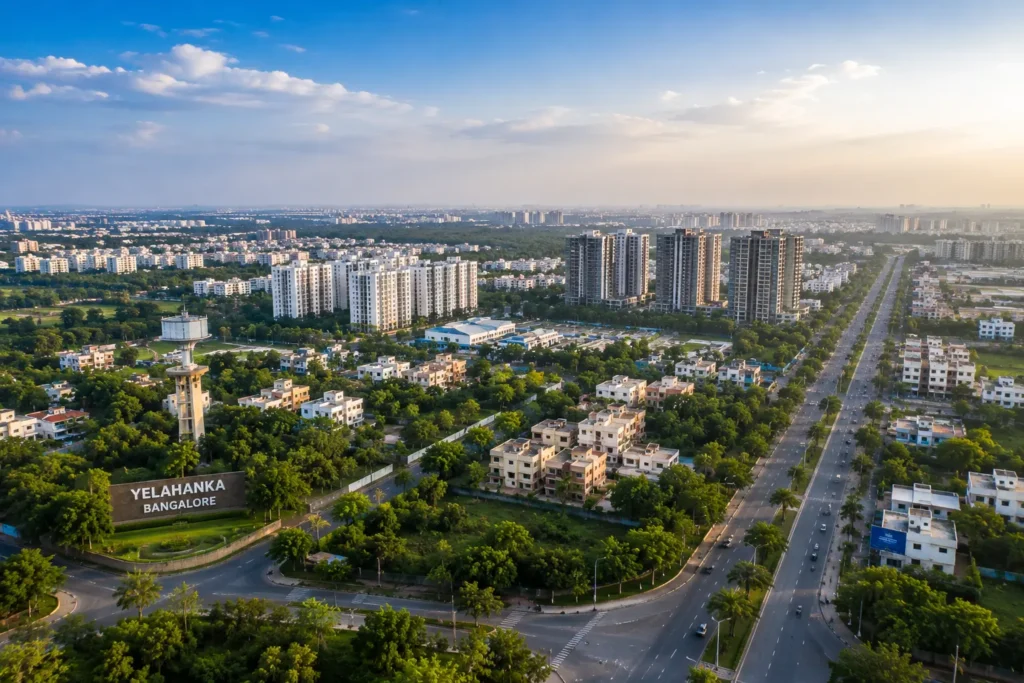
Yelahanka was originally an independent town, founded by Kempe Gowda before he went on to found Bangalore itself the locality predates the city it’s now part of. That older, planned layout is still visible in Yelahanka New Town: wider roads, more tree cover, and lower traffic density than most parts of North Bangalore.
What’s changed recently is the pace of development around it. New schools, an under-construction metro line, and hospital expansions are all active right now. Yelahanka was previously seen as distant from the city core, useful mainly for its airport proximity. That perception is outdated. Much of the infrastructure that newer corridors are still building was already in place here years ago, and buyer interest has caught up with that reality.
What Makes Yelahanka Bangalore Special
A few factors consistently come up when buyers explain why they chose this locality.
Proximity to Kempegowda International Airport is one of the most cited reasons, particularly for frequent flyers and aviation-linked professionals. The layout itself is another genuinely wide roads and open green space, not isolated pockets of landscaping. The Centre for Sports Excellence (the Padukone-Dravid academy) adds an institutional anchor that’s difficult to replicate in newer localities. Manyata Tech Park being a short drive away, rather than a long commute, is also a meaningful factor for working professionals.
None of these are new advantages. They are simply becoming more visible as surrounding infrastructure catches up.
How Yelahanka Bangalore Is Shaping the Future
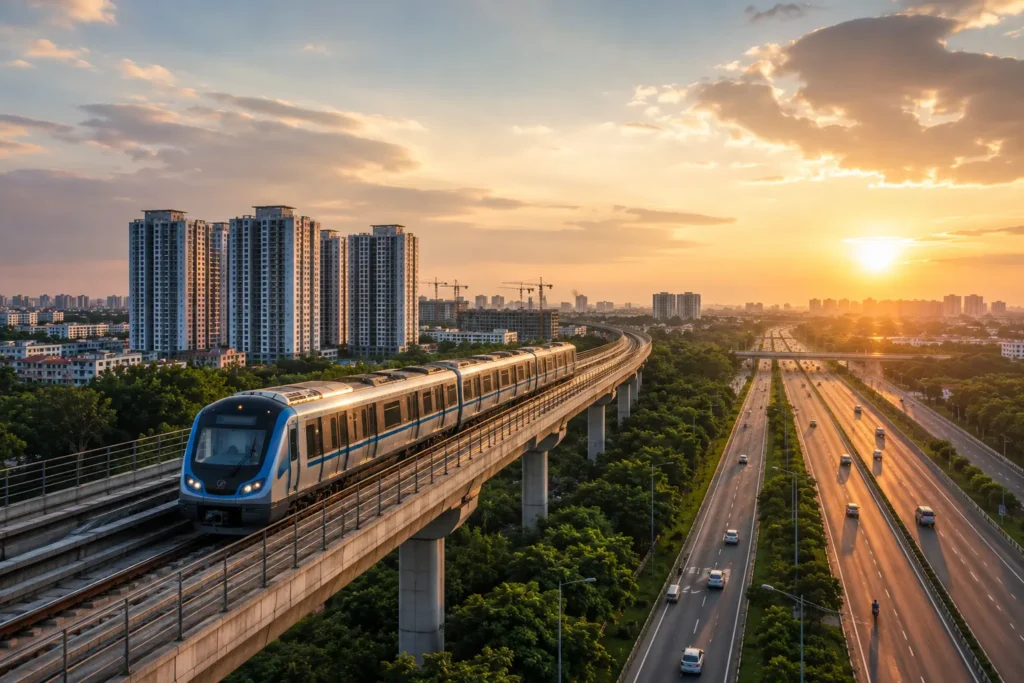
A few ongoing developments are worth tracking closely.
The Namma Metro Blue Line, also known as the Airport Metro, will include a dedicated Yelahanka station. Phase 2A is currently targeted for December 2026, with the airport-connected section expected in 2027. Bangalore’s metro projects have a documented history of delays, so these timelines should be treated as indicative rather than fixed.
Source: Wikipedia — Blue Line (Namma Metro)
The Peripheral Ring Road and Satellite Town Ring Road are both planned, and both are intended to reduce traffic load on Bellary Road, which currently carries more traffic than it was designed for.
Namma Metro’s Phase 3 expansion carries a budget of over ₹15,611 crore, with funding support from ADB and JICA. Part of this investment is expected to improve last-mile connectivity in the area over time.
Source: Yelahanka Property Market Guide
Key Areas to Know Around Yelahanka Bangalore
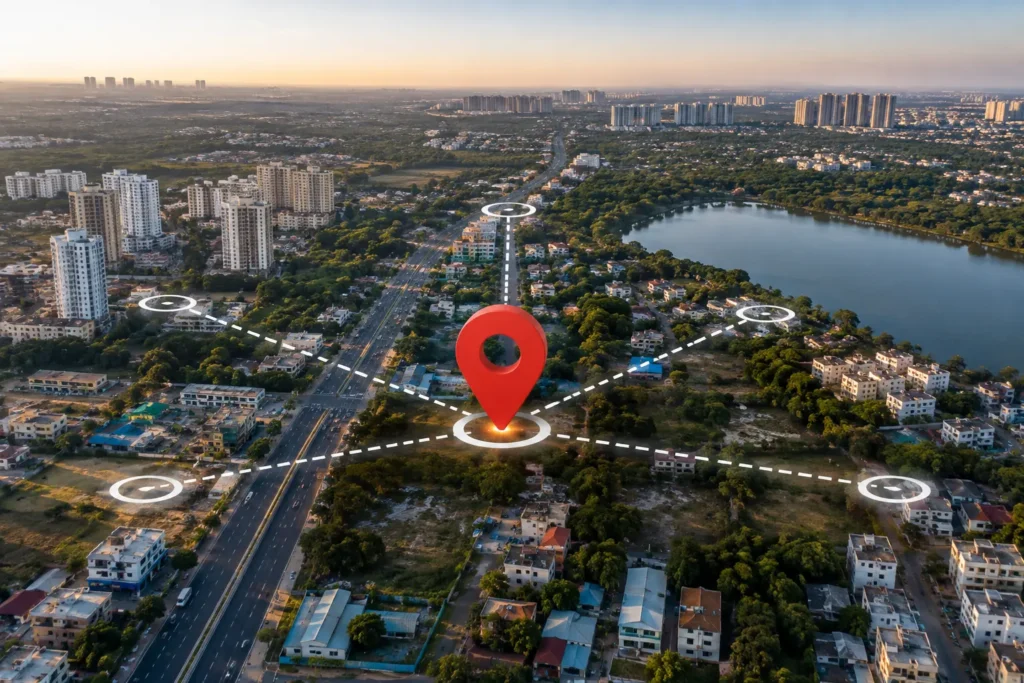
A few neighbouring localities are relevant when evaluating this area:
- Chapparkallu Road — a quieter stretch close to New Town, now attracting new RERA-approved apartment developments.
- Singanayakanahalli, in Yelahanka North — seeing a wave of new gated township development.
- Devanahalli — home to the airport itself, along with a growing base of IT parks.
- Jakkur — known for its flying school, lakes, and a concentration of villa communities.
- Hebbal — functions mainly as a connector, linking the area to the rest of the city via flyovers and the Outer Ring Road.
Connectivity: Roads and Transit
Connectivity is one of the primary reasons residents cite for staying in this locality long-term.
By road: Bellary Road (NH-44), Doddaballapura Main Road, and the Outer Ring Road connect the area to Hebbal, central Bangalore, and the airport corridor.
By rail: Yelahanka Junction connects to the Bangalore-Kolar, Guntakal-Bangalore, and Chennai-Bangalore lines a level of rail access not every North Bangalore locality has.
Source: 99acres — Locality Overview
BMTC buses run regularly toward Hebbal, Devanahalli, and central Bangalore. Once the Blue Line metro is operational, commute times to Hebbal and the airport are expected to reduce, though the exact timeline remains uncertain given past delays.
Amenities Around Yelahanka Bangalore: Schools, Hospitals and Retail
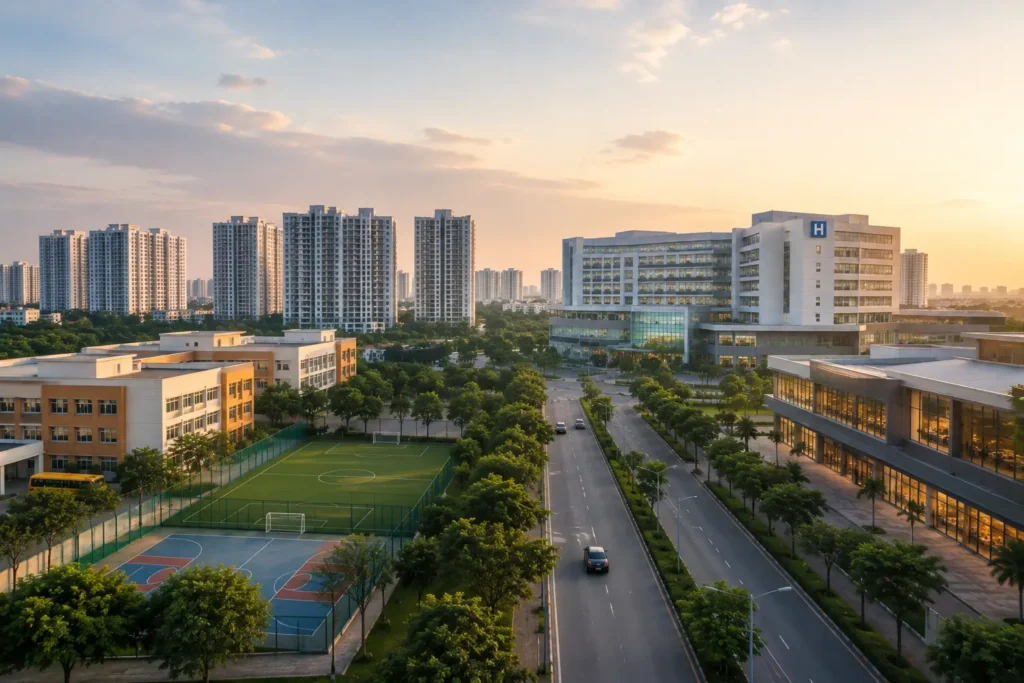
This is an area where Yelahanka holds a clear advantage over newer corridors — its amenities are already operational rather than under construction.
1.Schools: Canadian International School, Delhi Public School (North), National Public School, Embassy Stonehill International School, Sadhu Vaswani International School.
2.Higher education: REVA University, NMIT, BMSIT.
3.Hospitals: Columbia Asia, Aster CMI Hospital, Akash International Hospital.
4.Retail: Esteem Mall, along with established neighbourhood markets across New Town.
Top Residential Developments in Yelahanka Bangalore
Sambhav Rise of Aura, on Bettahalasur, North Bengaluru, is the most notable recent launch in the locality. It is newly launched, RERA approved, and the first approved apartment project on this specific stretch of Chapparakallu Road. It is located 750meter to the Centre for Sports Excellence, and to both Embassy Stonehill and beside Sadhu Vaswani International Schools a combination of proximities not commonly found together elsewhere in the area. The project sits just off Bellary Road (NH-44), providing direct access to both Yelahanka New Town and the airport corridor.
● Live inventory sheet –current unit availability and floor plans
● Detailed blog on Sambhav Rise of Aura – full project walkthrough
Further into Yelahanka North is CKPC Winds of Change in Singanayakanahalli — a 7.5-acre township across 9 towers, offering 2 to 4 BHK homes. It is accessible via Bellary Road and the internal arterial roads running through Yelahanka North.
● Complete guide to CKPC Winds of Change — project details and floor plans
Yelahanka Bangalore Market Trends: Appreciation and Rental Yield
| Period | Growth |
|---|---|
| 1 Year | 14.9% |
| 3 Year | 50.0% |
| 5 Year | 87.8% |
| 10 Year | 157.1% |
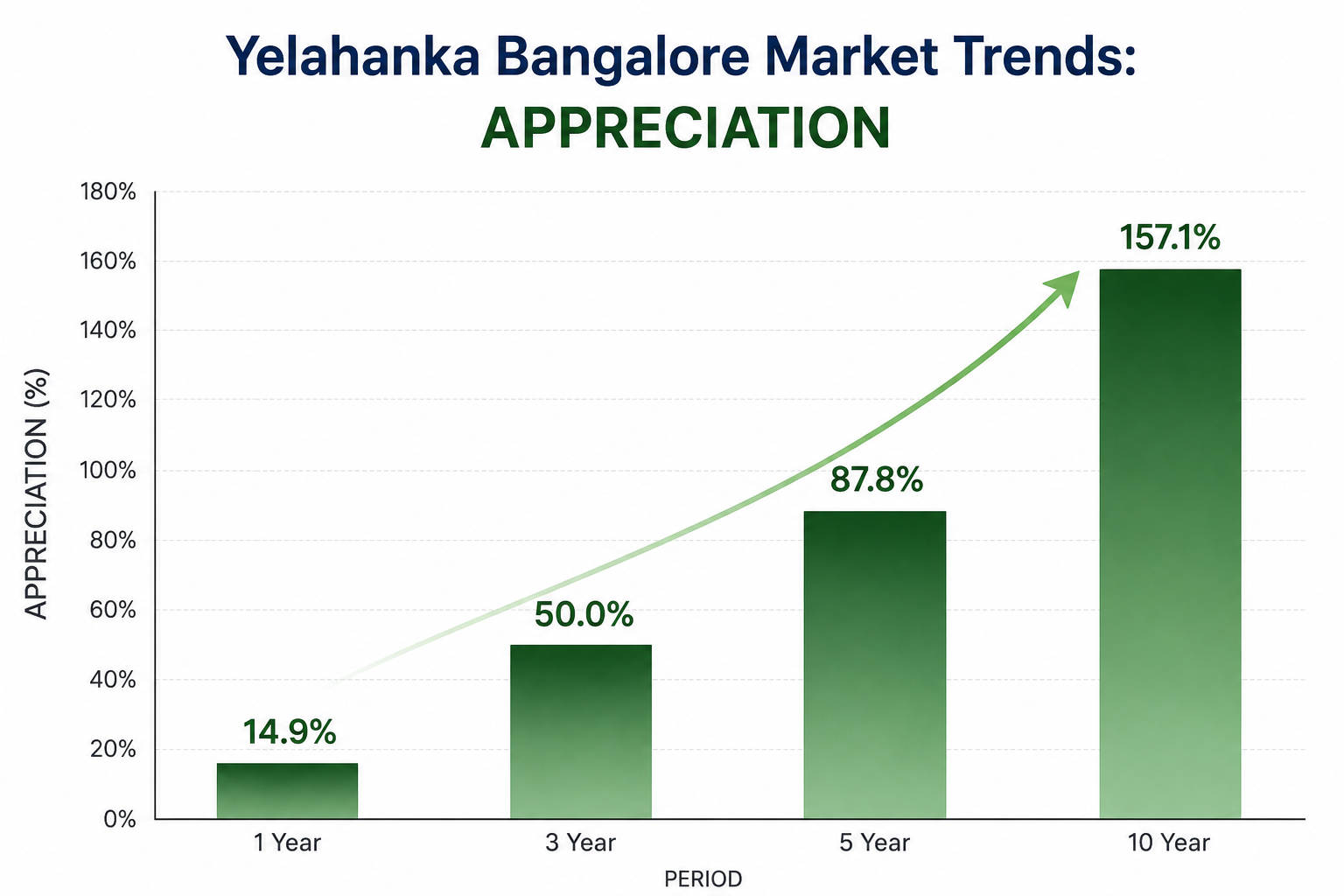
Flat prices currently range between ₹9,000 and ₹12,600 per sq ft, averaging around ₹10,800. Land rates in the same locality have moved at a different pace up 9.1% over one year, 44.0% over three years, and 164.7% over ten years indicating that land and built apartments are not appreciating at the same rate here.
Rental yield in Yelahanka is 2%. This is on the lower end, which indicates the market is driven primarily by end-users rather than rental investors.
Source – 99 Acres
Why Are Yelahanka Bangalore Prices Increasing So Fast?

Several factors are contributing to this simultaneously, rather than any single cause.
Supply is genuinely constrained relative to demand. Unlike corridors such as Devanahalli, which still have significant open land available, Yelahanka consists largely of established layouts, with only specific pockets like Chapparakallu Road opening up for new apartment development. This scarcity contributes directly to price growth.
The anticipated metro line is also a factor localities expecting metro connectivity typically see price appreciation ahead of the infrastructure actually being completed, and this pattern is visible around Yelahanka’s upcoming Blue Line station. Combined with stable, long-term airport proximity and social infrastructure that is already built rather than promised, buyers are willing to pay a premium to avoid the multi-year infrastructure risk associated with newer corridors.
This growth pattern differs from more speculative corridors such as Devanahalli or parts of Sarjapur, where price increases are often driven by anticipated (and unbuilt) infrastructure. Yelahanka’s 14.9% one-year and 50.0% three-year growth figures correspond more closely to infrastructure that is actually under construction or already operational metro work in progress, established schools, and an airport that has been functional for over a decade. This represents a comparatively steady growth pattern.
What Lies Ahead for Yelahanka Bangalore
The outlook for Yelahanka remains steady rather than speculative. Ongoing metro development, ring road connectivity, and new RERA-approved project on stretches like Chapparakallu Road are adding fresh inventory without disrupting the locality’s established character. For buyers prioritizing functioning schools, hospitals, and transit over infrastructure that is still being built, developments like Sambhav Rise of Aura fit that requirement directly.
FAQ
What is Yelahanka Bangalore known for?
Yelahanka predates Bangalore itself it was founded as an independent town by Kempe Gowda before he went on to found Bangalore. Today it’s known for wide, planned roads, established greenery, a cluster of reputed schools (Canadian International School, National Public School, Delhi Public School North), and direct proximity to Kempegowda International Airport.
What makes Yelahanka Bangalore special compared to other North Bangalore localities?
Unlike corridors such as Devanahalli or parts of Sarjapur, where schools, hospitals and retail are still being built out, Yelahanka’s social infrastructure Columbia Asia and Aster CMI hospitals, the Centre for Sports Excellence, Esteem Mall is already fully operational. Buyers get an established locality rather than a bet on future development.
What are current property prices in Yelahanka Bangalore?
₹9,000 to ₹12,600 per sq ft, averaging ₹10,800/sq ft, up 14.9% over the last year and 87.8% over five years.
How well connected is Yelahanka Bangalore?
By road: Bellary Road (NH-44), Doddaballapura Main Road, and the Outer Ring Road. By rail: Yelahanka Junction, connecting to the Bangalore-Kolar, Guntakal-Bangalore, and Chennai-Bangalore lines. A dedicated Blue Line metro station is under construction, with Phase 2A targeted for December 2026.
What type of properties are available here?
Mostly established independent layouts and gated communities within Yelahanka itself. New RERA-approved apartment supply is limited within the locality, though nearby pockets are seeing fresh launches for example, Sambhav Rise of Aura in Bettahalasur (roughly 3km from NH-44) and CKPC Winds of Change in Singanayakanahalli.
What is the rental yield in Yelahanka Bangalore?
Rental Yield is 2% on the lower end, indicating the market is driven more by end-users than rental investors.
Why are property prices rising so fast in Yelahanka Bangalore?
Four factors compounding together: limited new apartment supply within established layouts, price appreciation ahead of the Blue Line metro’s actual completion, steady airport-driven demand that’s held for over a decade, and social infrastructure that’s already built rather than promised which lets buyers skip the multi-year “wait and see” risk that newer corridors carry.
Is Yelahanka Bangalore a good place to invest?
The return case here is appreciation-led, not yield-led 87.8% over five years, 157.1% over ten, against a thin 2% rental yield. It suits a buyer planning a multi-year hold for capital growth or end-use, not someone optimizing for rental cash flow.
