

Bangalore has always been a city of dreams. People come here for jobs, education, startups, and a better lifestyle. With new tech parks, metro lines, and residential communities growing every year, the big question many families and professionals are asking in 2026 is simple:
Should I buy a home or keep renting?This blog breaks down the real side of buy vs rent in Bangalore 2026 in a clear and simple way, helping you choose what truly fits your life ahead.
Why This Question Matters More in 2026
The way people live and work in Bangalore has changed. Hybrid work, higher salaries in tech, rising land prices, and better infrastructure have all shaped the housing market. At the same time, rents have also gone up in many popular areas like Whitefield, Sarjapur Road, North Bangalore, and Electronic City.
According to the Magic bricks Rental Index for July–September 2025, average apartment rents across major Indian cities, including Bangalore’s key IT corridors, recorded a year-on-year growth of around 18%.
source : therealtytoday
This means renters are paying more every month, while buyers are dealing with higher property prices and home loan rates. So the decision is not as easy as it used to be.If you’re also wondering is 2026 the right time to buy an apartment in Bangalore, we’ve covered that in detail separately Let’s break down buy vs rent in Bangalore 2026 step by step.
Behind the Monthly Rent: Bangalore’s True Living Cost
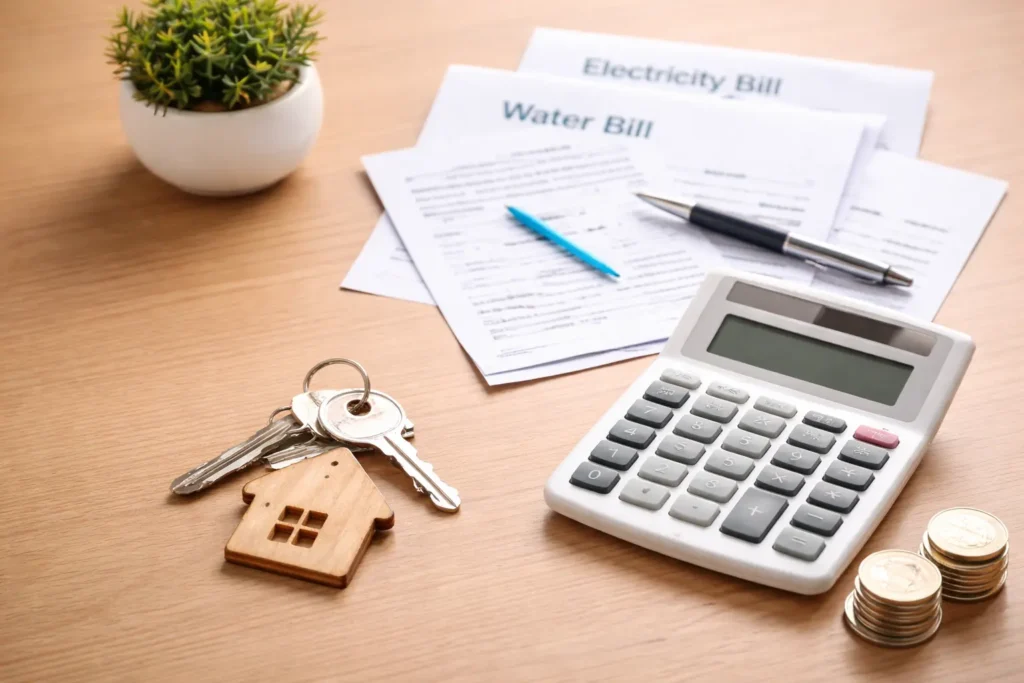
Renting looks simple. You pay a deposit, monthly rent, and move in. But when you look at the long-term picture, the numbers tell a different story.
Based on rental trends reported in 2025, monthly rents for a 2BHK near Bangalore’s major tech hubs typically range between ₹23,000 and ₹45,000. In 2026, similar pricing levels are expected to continue in high-demand locations, depending on the neighborhood and amenities offered.
Source : Kots world
Here’s what renters usually pay for:
- Monthly rent
- Security deposit (usually 6–10 months of rent)
- Annual rent increases
- Moving costs when changing homes
- Maintenance charges in some cases
The biggest point is this: when you rent, all this money goes to living, not owning. After 10 or 15 years, you still don’t have a property in your name.
The Real Cost of Owning a Home in Bangalore
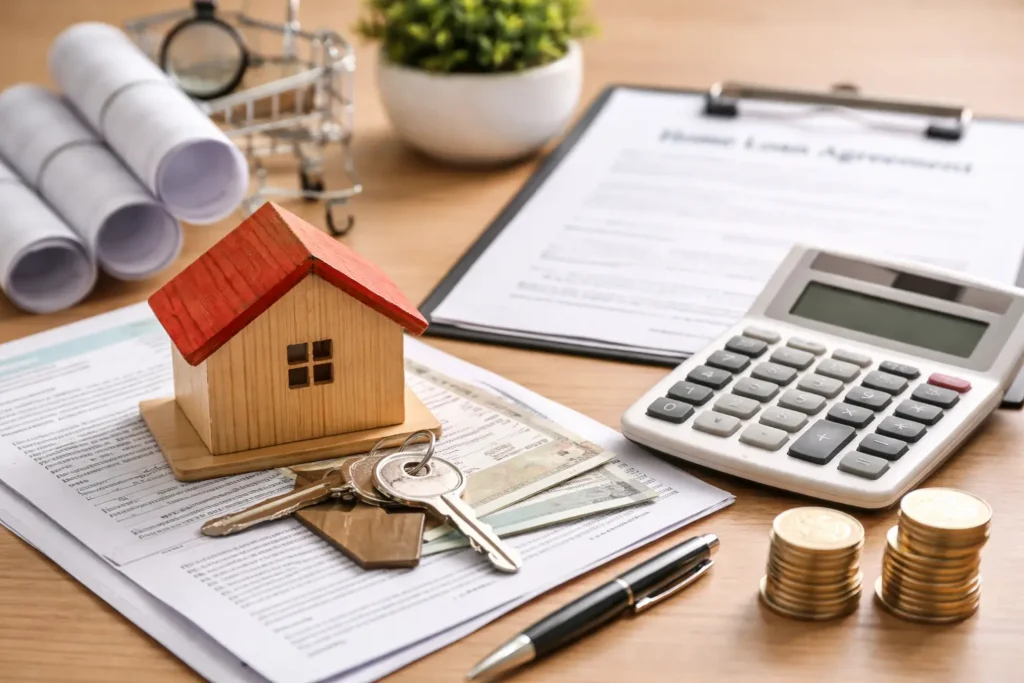
Buying a home feels like a big step. There is a down payment, registration, stamp duty, and a home loan. At first, it looks more expensive than renting.
Based on property rate trends observed across Bangalore in 2025, similar pricing patterns are expected to continue into 2026. Well-connected areas near IT hubs, metro lines, and major roads are likely to remain at the higher end of the market, while emerging corridors continue to offer more budget-friendly options for buyers.
Area-Wise Apartment Price Snapshot
| Location | Approx. Price Range (₹ per sq. ft.) | Area Type |
| Sarjapur Road | ₹11,500 – ₹12,500 | IT Corridor / High Demand |
| Outer Ring Road (East) | ₹10,000 – ₹11,000 | Business & Tech Hub |
| Whitefield | ₹9,000 – ₹11,500 | IT & Residential Zone |
| Yelahanka | ₹9,500 – ₹12,000 | North Bangalore / Growth Area |
| Thanisandra | ₹10,500 – ₹13,000 | Emerging Prime Area |
| MG Road | ₹12,000+ | Central / Premium Zone |
Source : 99 Acres
Prices reflect general market listings and may vary by project, builder, and amenities.Before you commit, it also helps to go through a checklist before buying an apartment in Bangalore so you don’t miss any cost.
When you buy, you usually pay:
- 10% to 20% as down payment
- Monthly EMI for 15 to 30 years
- Registration and stamp duty
- Maintenance charges
But unlike rent, your EMI is not just an expense. A part of it builds ownership. Every month, you are moving one step closer to owning your home fully.
This is where the comparison of buy vs rent in Bangalore 2026 becomes more about long-term thinking than short-term comfort.
Lifestyle Differences Between Buying and Renting
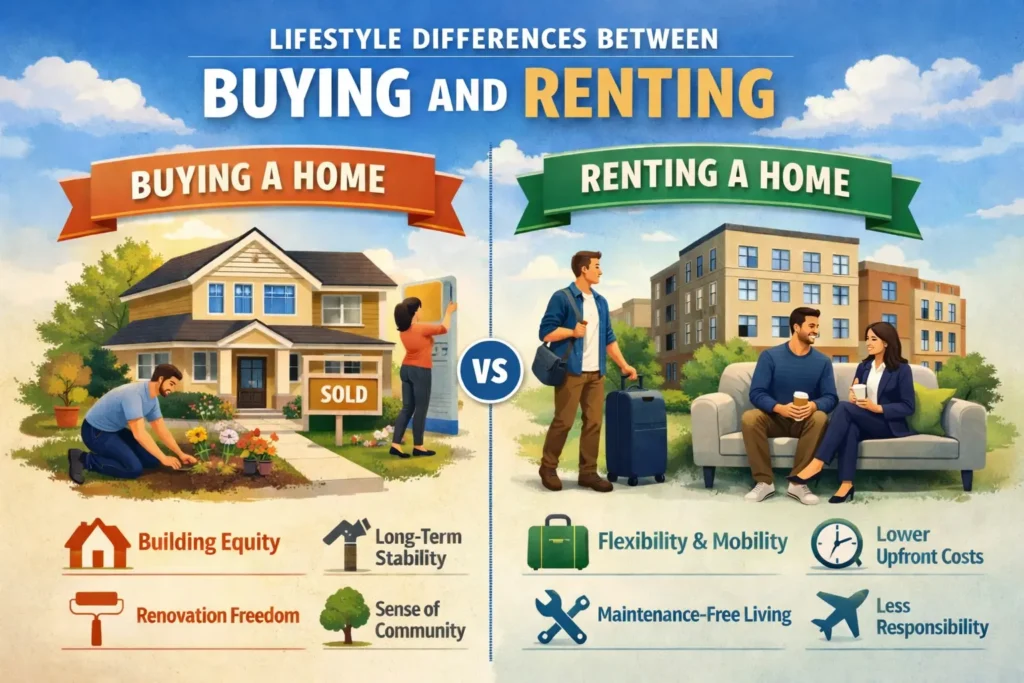
When You Rent
Renting gives you freedom. You can move closer to your office, shift to a bigger home, or change cities without worrying about selling a property. This is helpful for:
- Young professionals
- People who change jobs often
- Families unsure about staying in Bangalore long-term
- Landlord restrictions
- Sudden rent increases
- Limited freedom to renovate or customize
When You Buy
Buying gives you stability. You can paint the walls, change the kitchen, and truly make the place your own. There is also a sense of emotional comfort that comes with owning a home.
Families with kids often prefer buying because:
- Schools stay the same
- Neighborhood relationships grow
- No stress of shifting homes every few years
So, in the buy v/s rent in Bangalore 2026 debate, lifestyle choice plays a big role.
How Your Decision Pays Off Over the Years
Think about where your money goes over time, not just month to month.
If you rent a 2BHK in 2026 for around ₹30,000 a month, you’re spending ₹3.6 lakhs a year just to stay in the same home. As rents rise over the years, that total quietly grows into a much larger amount. After a decade, the overall outflow can easily cross the ₹40 lakh mark, even without moving to a bigger place or a better location.
Now compare that with buying a similar apartment. Your monthly EMI may feel higher in the beginning, but each payment adds to your ownership. Over time, you’re not just paying for a roof over your head — you’re building an asset.
According to Knight Frank India Real Estate Report 2025, Bangalore remains one of the top cities in India for residential property growth, driven by IT expansion and infrastructure development.
This is why many financial planners say buying is not just about living, but also about building wealth.
Impact of Infrastructure Growth in Bangalore
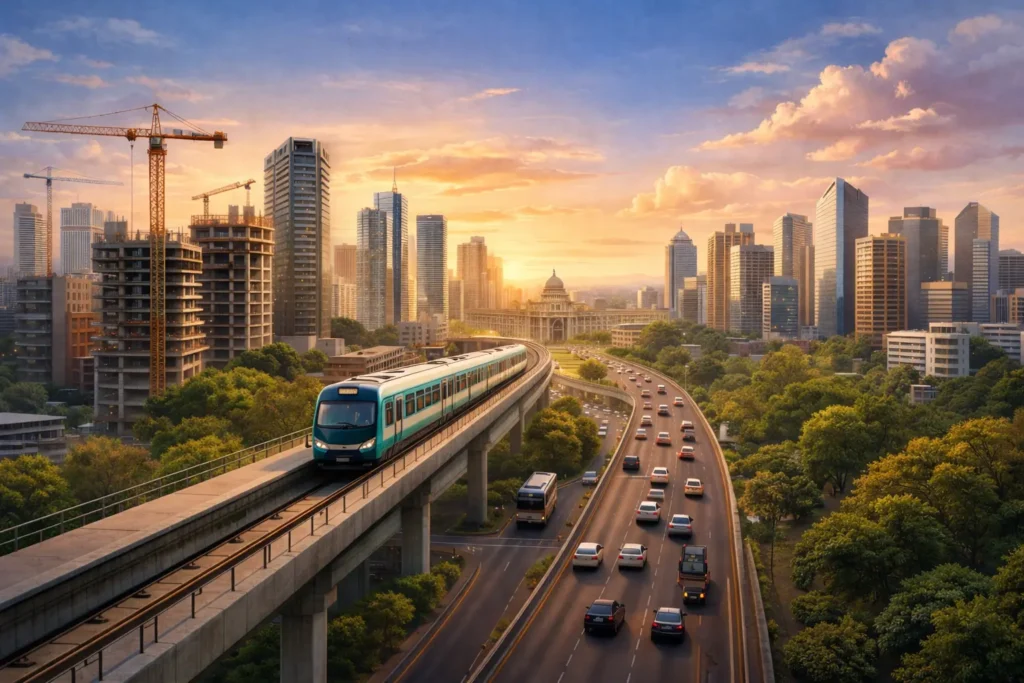
Bangalore is changing fast. Projects like: Namma Metro Phase 2 and Phase 2A ,Peripheral Ring Road, New tech parks in North and East Bangalore are improving connectivity and increasing property value in nearby areas.
If you buy in a growing location, your home’s value can increase over time. This is something renters do not benefit from.
So when comparing buy v/s rent in Bangalore 2026, think about where the city is going, not just where it is today.
Tax Benefits for Home Buyers
As per the Income Tax Act and guidelines issued by the Income Tax Department of India, home buyers can claim a deduction on home loan interest under Section 24(b) and on the principal repayment under Section 80CThese benefits can reduce your yearly tax burden by a good amount, especially if you are in a higher tax bracket.
Over time, the tax advantage makes buying more attractive for many salaried professionals.
Choosing Rent Over Buy: When It Makes Sense
Buying is not always the best choice. Renting can be smarter if:You plan to stay in Bangalore for less than 5 years You are still exploring career option you do not have enough savings for a down payment
You want to invest your money elsewhere, like mutual funds or business In these cases, locking your money into a property may limit your financial flexibility.
So the answer to buy vs rent in Bangalore 2026 is not the same for everyone.
IInvestment Angle: Buying as a Source of Passive Income

Some people buy not just to live, but to rent out.
In areas close to IT parks and metro stations, rental demand is always strong. If you buy in such a location, your tenant’s rent can help pay part of your EMI.
Over time, the property becomes a source of monthly income.
This is another point that makes buy vs rent in Bangalore 2026 an important financial discussion, not just a housing choice.
What Experts Suggest in 2026
Real estate advisors often say:
If you plan to stay in Bangalore for more than 7 to 10 years, buying usually makes better financial sense
If your job or lifestyle is uncertain, renting gives you flexibility
The key is to match your home decision with your life plan, not just market trends.
Final Thoughts
In 2026, Bangalore remains one of India’s strongest real estate markets. Jobs, infrastructure, and lifestyle continue to attract people from across the country.
The choice between buying and renting is no longer just about monthly cost. It is about your future, your family, and your financial goals. When you look at buy vs rent in Bangalore 2026, think long-term. Think about where you want to be, not just where you are today.
A home is not just four walls. It is a foundation for your next chapter. If you choose wisely, either path can lead to a happy and secure life in this growing city.
FAQ
Is it better to buy or rent in Bangalore in 2026?
For professionals planning to stay in Bangalore for 5 or more years, buying is the smarter financial choice in 2026. Property values in IT corridors like Whitefield, Sarjapur Road, and Thani Sandra are appreciating steadily, and EMIs on a Rs.70-80 lakh home loan are often comparable to monthly rent in the same areas. If your stay is under 3 years, renting offers more flexibility without the burden of a long-term loan commitment.
What is the average rent for a 2BHK apartment in Bangalore in 2026?
Based on 2025 rental trends continuing into 2026, a 2BHK apartment near Bangalore’s major IT hubs typically rents for Rs.23,000 to Rs.45,000 per month depending on the location and amenities. Areas like Whitefield and Sarjapur Road are at the higher end, while emerging corridors in North Bangalore offer relatively affordable rental options.
How much down payment is needed to buy an apartment in Bangalore in 2026?
To buy an apartment in Bangalore in 2026, you typically need to arrange 10% to 20% of the property value as a down payment. For a Rs.80 lakh apartment, that means Rs.8 to Rs.16 lakhs upfront, with the remaining amount covered through a home loan. Additional costs like stamp duty (around 5%) and registration charges apply on top of the property price.
Which areas in Bangalore are best for buying a home in 2026?
The best areas to buy a home in Bangalore in 2026 based on infrastructure growth and appreciation potential are Sarjapur Road, Thanisandra, Yelahanka, and the Outer Ring Road East corridor. These locations offer proximity to IT parks, upcoming metro connectivity, and relatively better value per square foot compared to premium central zones like MG Road.
What are the tax benefits of buying a home in Bangalore vs renting?
Home buyers in Bangalore can claim a deduction of up to Rs.2 lakh per year on home loan interest under Section 24(b) of the Income Tax Act, and up to Rs.1.5 lakh on principal repayment under Section 80C. Renters can claim House Rent Allowance (HRA) exemption, but the benefit decreases as income grows. For salaried professionals in higher tax brackets, buying a home typically offers better long-term tax savings than renting.
Will property prices in Bangalore increase in 2026?
Yes, property prices in Bangalore are expected to remain on an upward trajectory in 2026, driven by continued IT sector expansion, Namma Metro Phase 2 and 2A developments, and growing demand in North and East Bangalore corridors. According to the Knight Frank India Real Estate Report 2025, Bangalore remains one of India’s strongest cities for residential growth. Buyers who enter the market now in emerging zones are likely to benefit from capital appreciation over the next 3 to 5 years.
